News
The Scarlet Mantle and the Legacy of Alfred the Great: Honour, Kingship and Tradition
The Scarlet Mantle and the Legacy of Alfred the Great: Honour, Kingship and Tradition
1
Service Over Ambition: The Scarlet Mantle
Among the many distinctive features that set the Masonic Order of Athelstan apart from other Masonic Orders is its remarkable emphasis on scholarship, historical reflection, and the celebration of virtue through symbolism.
Within this unique framework stands one of its most prestigious distinctions —The Order of the Scarlet Mantle— an honour reserved not for ambition, but for service.
Unlike many Masonic ceremonies that commemorate a candidate’s progress through degrees, the Scarlet Mantle has always represented something different.
It is an acknowledgement that a Brother has already demonstrated unwavering commitment to the Order, its principles, and its Brethren.
It is, in every sense, a visible expression of gratitude bestowed upon those whose actions have strengthened the Order through dedication rather than expectation.
A Historical Foundation
The inspiration for the Order reaches back to the closing years of the ninth century and to one of the defining moments in Anglo-Saxon history.
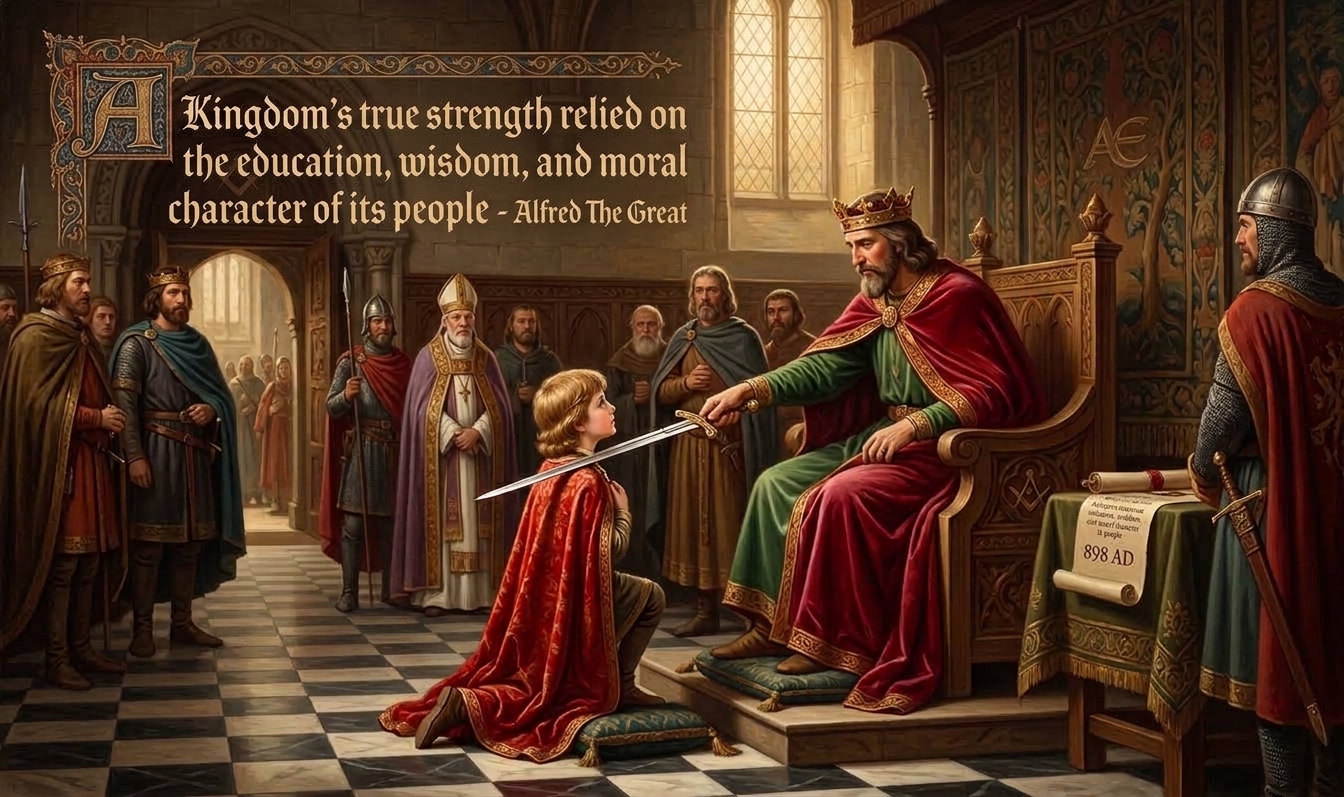
According to later historical tradition, the young King Athelstan was knighted by his grandfather, King Alfred the Great, around A.D. 898.
During this ceremony Alfred is said to have invested his grandson with a magnificent scarlet mantle together with a sword whose golden hilt was adorned with precious jewels.
This event has often been described as the earliest recorded knighting in English history, symbolising not merely military distinction but the recognition of honour, loyalty, wisdom and future leadership.
The founders of the Masonic Order of Athelstan adopted this powerful historical tradition as the basis for a special honour within the Order.
Rather than creating another progressive degree, they established a reward that would recognise exceptional service rendered to the Order itself.
Thus, from the earliest years of the Masonic Order of Athelstan, the Order of the Scarlet Mantle emerged as an appendant Order governed by its own Statutes while remaining inseparably connected with the ideals of King Athelstan and the legendary Assembly of York in A.D. 926.
2
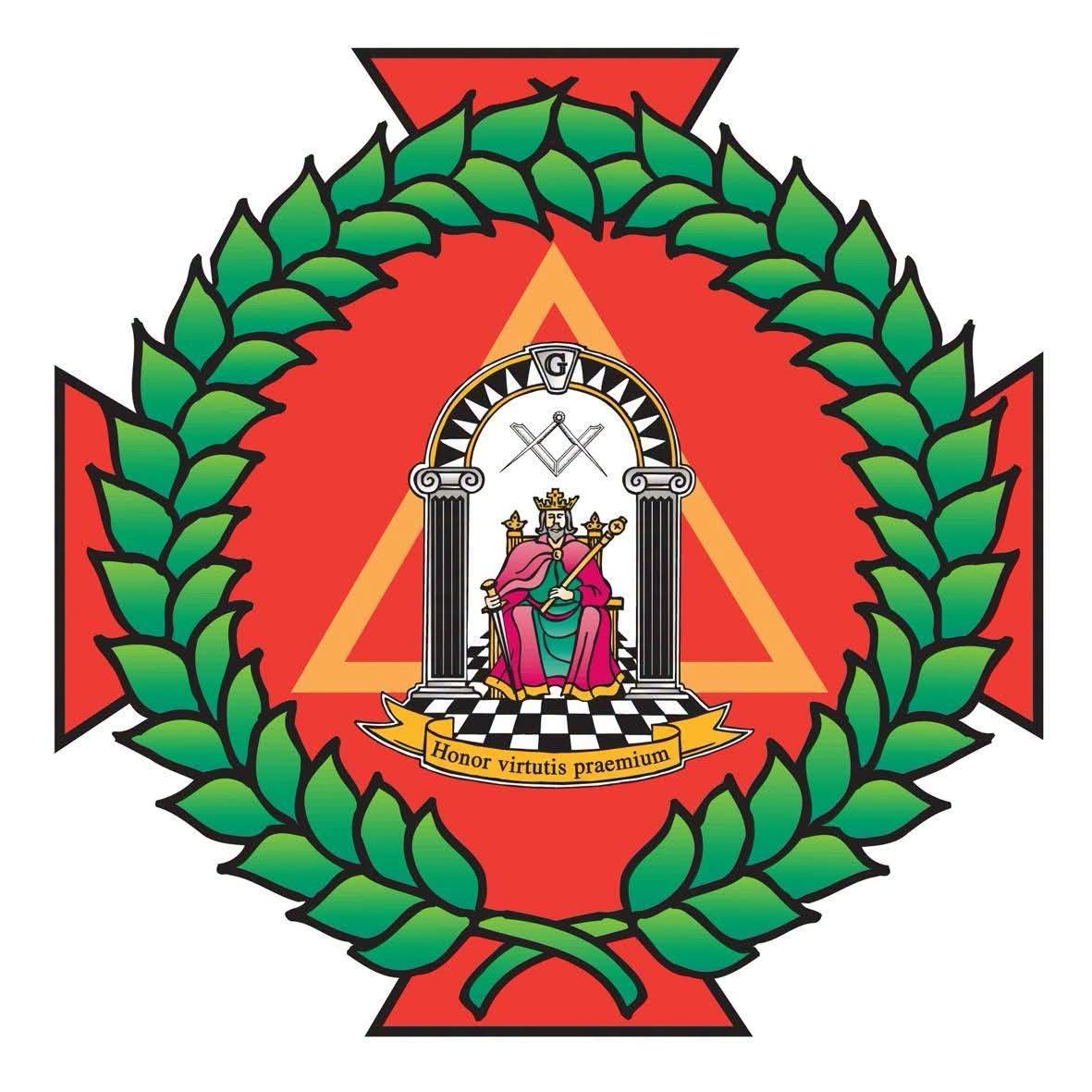
A Reward Rather Than a Degree
One of the most distinctive characteristics of the Scarlet Mantle is that it is not obtained by application or progression.
Membership is conferred solely upon Brethren who have rendered distinguished and meritorious service to the Order.
Such service may include years of leadership, ritual excellence, educational contribution, administrative dedication, or exceptional efforts in establishing and strengthening Courts and Provinces.
In a society where honours often follow position, the Scarlet Mantle reminds us that true recognition follows service.
This philosophy perfectly reflects the motto of the Order:
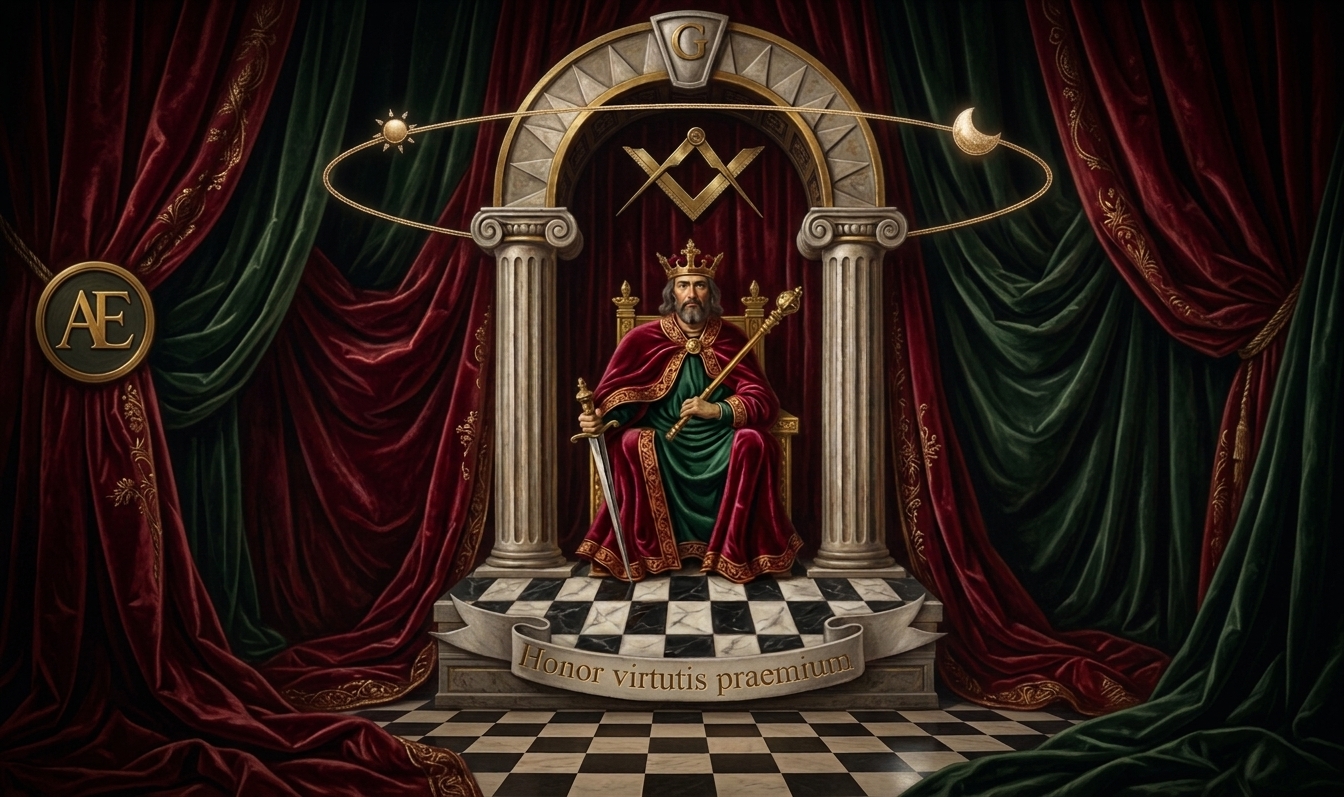
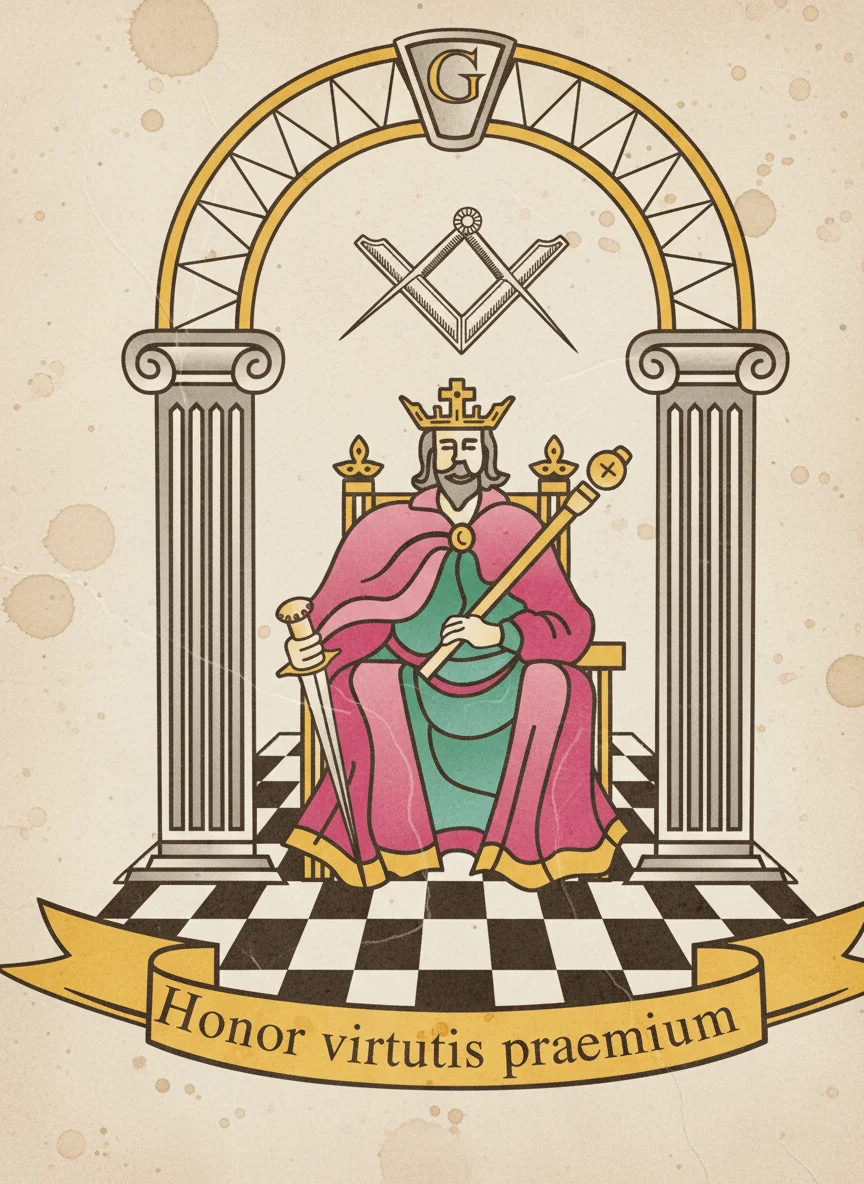
Honor – Virtutis – Praemium: Honour is the Reward of Virtue
The Three Grades
The Order traditionally comprised three progressive honours:
I. Knight of the Scarlet Mantle (KSM)
II. Knight Commander of the Scarlet Mantle (KCSM)
III. Knight Grand Cross of the Scarlet Mantle (GCSM)
Each distinction recognised increasing levels of distinguished service and could be used only within the context of the Masonic Order of Athelstan.
From Scarlet Mantle to the Ancient Masonic Order of Alfred the Great
A significant chapter in the history of the Order occurred in 2019.
Following several years of careful study and ritual revision, the Order of the Scarlet Mantle was formally reconstituted and renamed the Ancient Masonic Order of Alfred the Great (AMOAG).
The new title more clearly reflects the historical figure whose ceremonial act of investing Athelstan with the Scarlet Mantle inspired the honour in the first place.
At the same time, the post-nominal letters were updated:
I. KSM → KAG
Knight of Alfred The Great
II. KCSM → KCAG
Knight Commander of Alfred The Great
III. GCSM → GCAG
Knight Grand Cross of Alfred The Great
Although the title changed, the underlying ideals remained exactly the same: honouring exemplary service, preserving historical continuity, and celebrating the legacy of Alfred and Athelstan together.
3
The Symbolism of the Scarlet Mantle
Throughout history, the mantle has been one of the oldest emblems of authority.
Kings, judges, and military commanders wore ceremonial cloaks not merely as garments but as visible signs of responsibility and dignity. The colour scarlet has long symbolised courage, sacrifice, justice and sovereign authority.
Within the Order of Athelstan the Scarlet Mantle acquires an even richer meaning.
It reminds every recipient that true leadership is never measured by rank alone. Instead, authority is earned through humility, faithful service, and the willingness to labour for the benefit of others.
The mantle therefore becomes more than ceremonial clothing – it becomes a reminder that honour must always rest upon virtue.
The Regalia
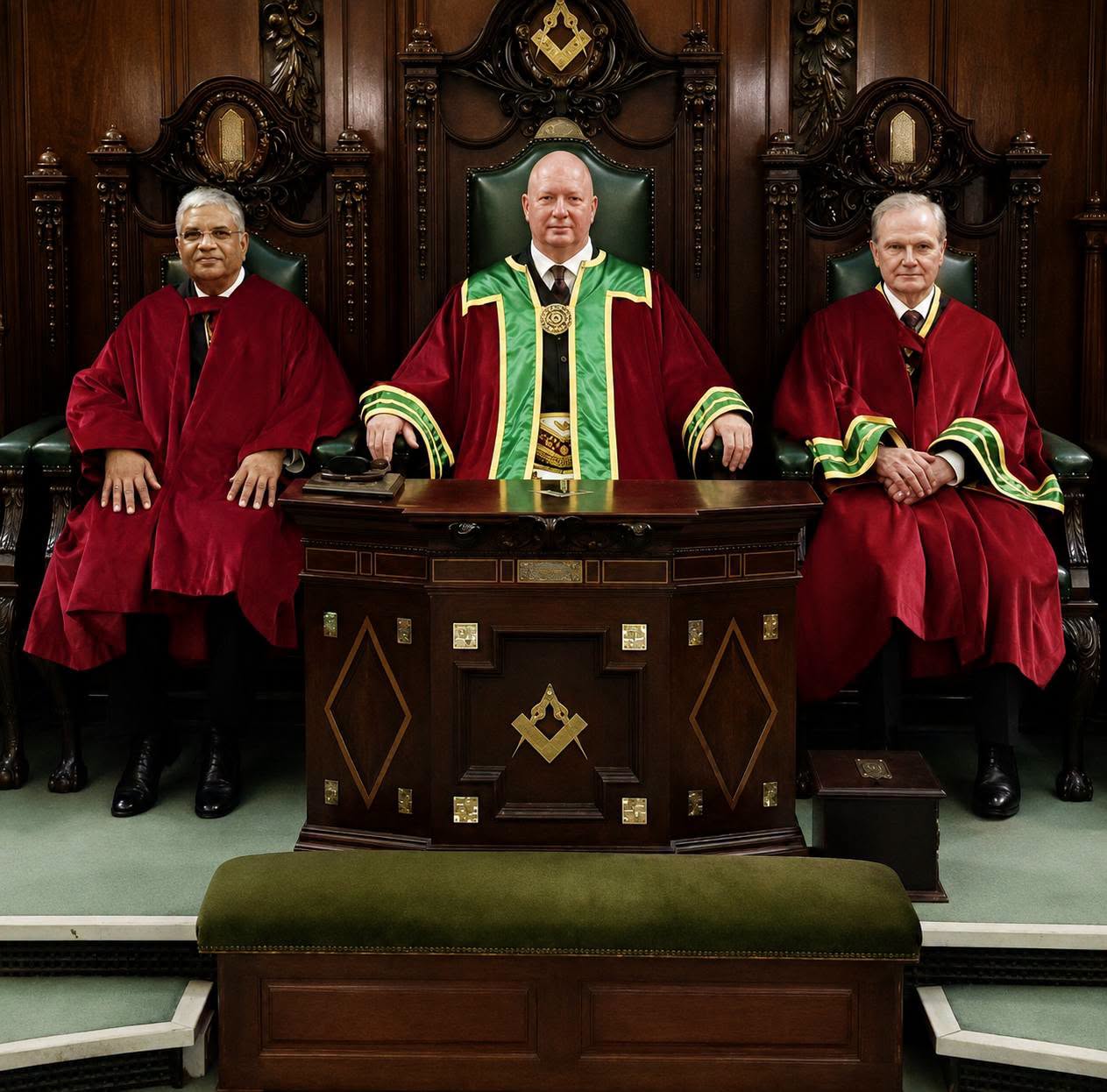
The regalia associated with the Scarlet Mantle – and today with the Ancient Masonic Order of Alfred the Great – are among the most elegant in contemporary Freemasonry.
The principal features include:
I. A magnificent scarlet mantle or cloak, recalling the legendary garment bestowed upon Athelstan by Alfred the Great.
II. A richly decorated collar bearing the insignia of the Order.
III. An ornate jewel, worn suspended from the collar, signifying the recipient’s grade and honour.
IV. Distinctive insignia appropriate to the various classes of Knighthood.
The colour scarlet dominates every element of the regalia, immediately recalling the historic ceremony that inspired the Order and symbolising courage, nobility and faithful service.
The regalia are worn with dignity during ceremonial occasions, serving not as ornaments of privilege but as visible reminders of responsibilities already fulfilled and of those that continue.
A Living Tradition
Although inspired by events more than eleven centuries old, the Scarlet Mantle continues to speak directly to modern Freemasons.
Its message is timeless !
Freemasonry flourishes because ordinary Brethren quietly undertake extraordinary service – organising meetings, preserving ritual, mentoring younger members, supporting charities, founding new Courts, and strengthening friendships across Provinces and Nations.
The Scarlet Mantle reminds us that such service does not go unnoticed.
It stands as one of the highest expressions of gratitude that the Masonic Order of Athelstan can bestow, linking today’s Brethren with the legendary virtues of Alfred the Great and King Athelstan while encouraging future generations to pursue excellence through humility, learning, and faithful labour.
In that sense, every Scarlet Mantle represents far more than a ceremonial distinction.
It represents a life lived in accordance with the timeless Masonic ideal that Honour is truly the Reward of Virtue !